Beginning with YuBucks, this is the premium virtual currency purchased with real money. Its best use is for sending Gifts during live streams, which is the most direct way to support creators, get noticed, and build rapport
Strategically, if your aim is to grow your own live streaming audience, actively gifting others in their streams can encourage reciprocity and draw their followers to your profile. Furthermore, YuBucks can be used to purchase Power Packs and Coins, but it is often more economical to subscribe to Power Pack directly if that is the intended goal. For a user primarily interested in supporting friends or specific creators, allocating YuBucks for eye-catching, high-value gifts during their streams is the most impactful social investment, as these visual tokens of appreciation publicly highlight your support and can lead to shoutouts and stronger connections.
Coins, on the other hand, are earned through activities like daily logins, participating in live streams, or completing offers, and can also be bought with YuBucks. Their primary function is to fund Boosts, which temporarily amplify your profile’s visibility in the swiping (or “swiping”) discovery sections.
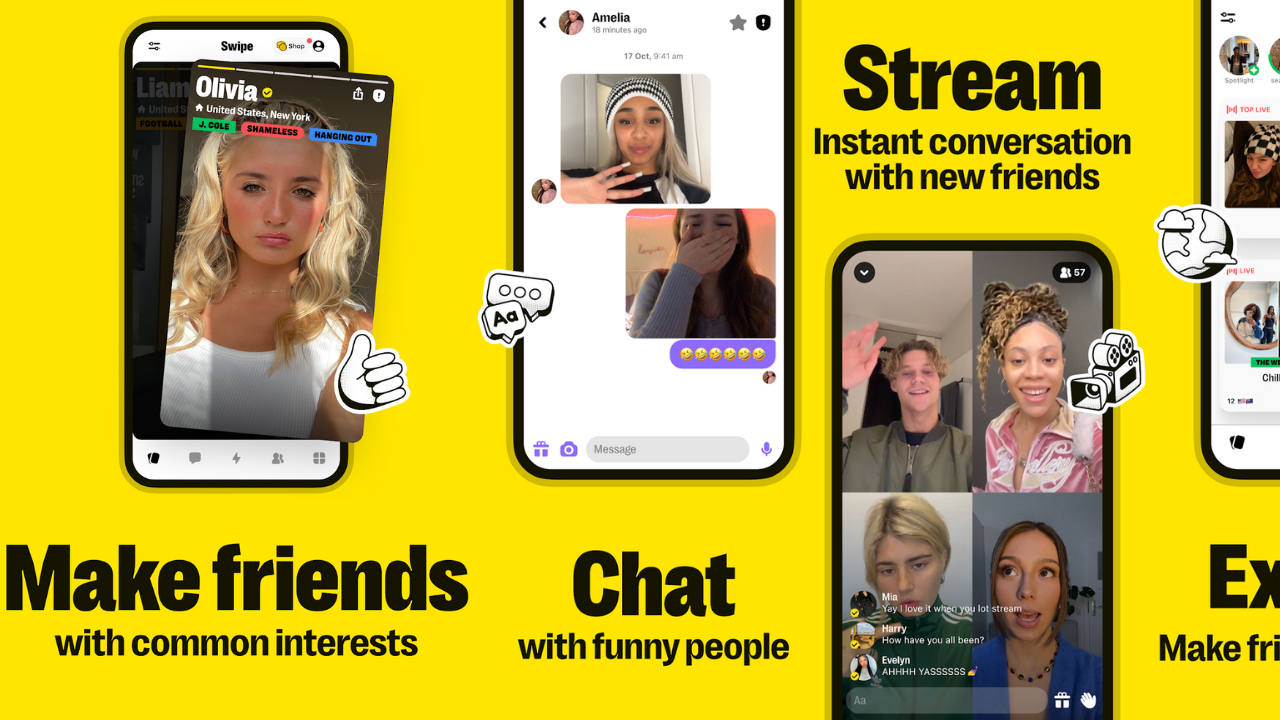
First off, the whole live streaming thing. But wait, before you roll your eyes and think of another toxic, vanity-led broadcast platform, Yubo does it differently. The streams are intimate, often silly, and profoundly low-stakes. You jump into a live room with like, six people. Someone in Sweden is showing their dog. Someone in Texas is debating the best pizza toppings. A kid in Paris is just playing guitar badly but with so much enthusiasm it’s contagious. There’s no “creator” and “audience” hierarchy in the way other apps have ruined it. It’s just a bunch of people in a digital living room, hanging out. It’s the modern equivalent of kicking it in a friend’s basement, where the conversation meanders from deep philosophical questions to arguing about whether a hot dog is a sandwich, all in the span of twenty minutes. It’s unstructured, it’s authentic, and it lacks that polished, content-creation pressure that makes Instagram Stories feel like a second job.
Then there’s the discovery and the swiping. But again, it’s not a dating app. Let me repeat that, because everyone’s mind goes there: it is NOT a dating app. The swipe feature is simply an introduction. It’s like walking into a massive, global party and just nodding at someone across the room who seems cool. You match based on interests, not just a curated set of six photos designed to show off your abs or your last vacation. The bio actually matters here. People list their hobbies, their favorite bands, their weirdest hyper-fixations. I’ve connected with people because we both have a deep and abiding love for a niche cartoon from the 90s, or because we’re both trying (and failing) to keep a succulent alive. It’s interest-based networking for the friendship-oriented, and as a millennial who watched social media evolve from “What’s on your mind?” to “Here’s what you should buy, think, and aspire to be,” that feels like a breath of fresh air.
As a generation, we millennials are paradoxically the most connected and the loneliest. We have hundreds of “friends” online but often lack a simple group chat for sharing random memes at 2 a.m. Yubo directly addresses that weird, specific loneliness. It’s built for making friends in an era where making friends as an adult is awkward and hard. There’s no pressure to perform a “best life” narrative. In fact, being a little awkward, a little bored, a little too passionate about something random is the currency. It’s okay to just say, “Hey, I’m bored, anyone want to talk about astrophysics or bad reality TV?” The app facilitates spontaneous, genuine conversation that platforms like Facebook and Instagram have systematically engineered out of existence in favor of passive, scroll-based consumption.
Also, can we talk about the international vibe? In a single evening, I might have a broken but hilarious conversation with someone in Japan about regional snack foods, listen to someone in Brazil talk about their favela’s football team, and get a virtual tour of someone’s rainy street in Scotland. It’s a cliché to say it makes the world smaller, but it does. It fosters a kind of cultural curiosity and empathy that is desperately needed. You’re not consuming a travel blogger’s perfectly filtered content; you’re talking directly to a peer in another country about their day. That’s powerful. It breaks down preconceptions and builds real, if fleeting, human understanding.